 Skip to content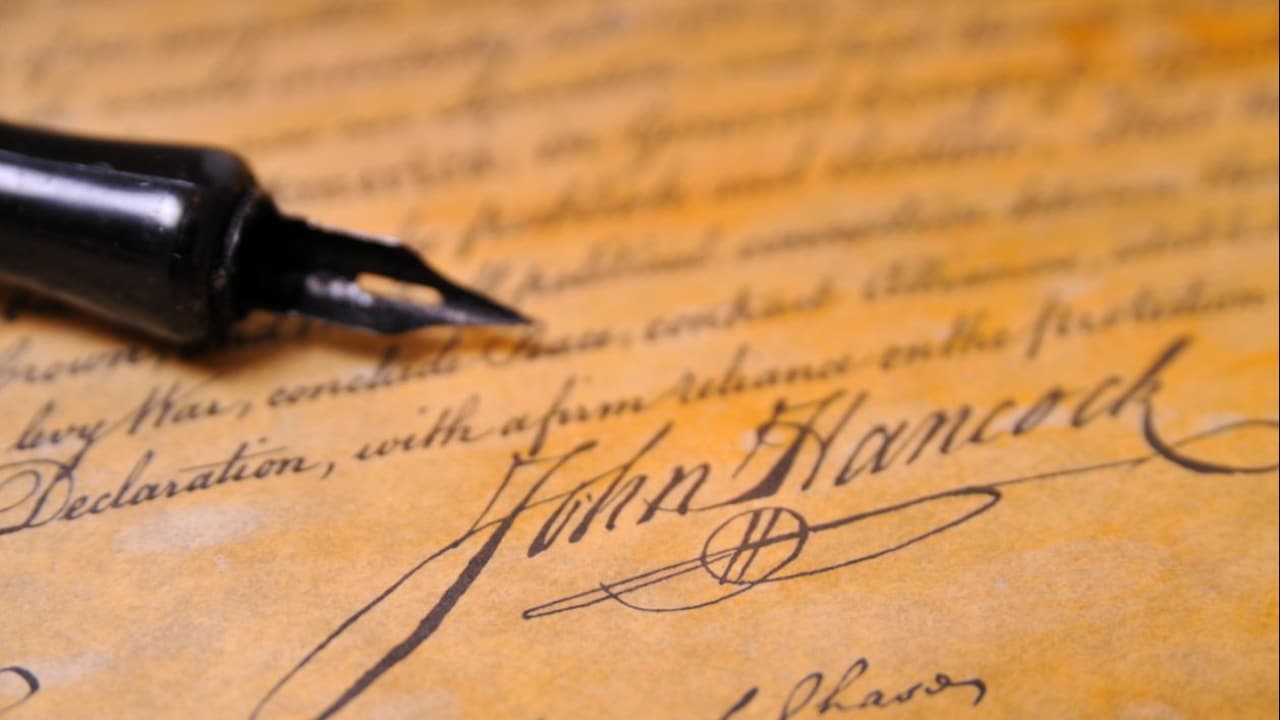
National Handwriting Day is celebrated January 23rd in honor of John Hancock, whose large, elaborate signature at the bottom center of the U.S. Constitution testifies to the importance placed on penmanship many years ago. The beautiful swooping letters presented a perfect finish to the world-changing document. His birthday, then, seems an appropriate day to highlight the intricate, very human act of writing by hand.
I’ve read some wonderful books on the history of handwriting. Books such as Script and Scribble by Kitty Burns Florey and Imprint and Trace by Sonja Neef. They provide a fascinating walk through the development of various tools and styles of writing. From cave paintings to hammer and chisel, from the printing press to the typewriter, from quill and ink to the ballpoint pen—time and distance between humans is bridged by the written word. (As an interesting side note: whether one uses a pencil or a computer, all writing is done by the human hand… More on that in another blog.)
I talk to people almost every day about handwriting. Discussions range from topics of penmanship to computer technology to classroom instruction. Frequently I hear statements like, “She couldn’t even read the professor’s handwriting because it was in cursive!” Or, “They don’t teach handwriting because kids just text and keyboard.” What I want to note here, is that in most conversations it is clear that the word “handwriting” has become synonymous with “cursive” or “script,” which may be why some people believe it is something of the past. Literally speaking, however, handwriting is quite simply the act of writing by hand. Sure, letters can be connected; they can be fanciful and formal. But handwriting can also be simple, basic, quirky, or even awkward. It should, of course, be legible but style and presentation is up to the writer. Handwriting is useful and, in many ways, necessary to human flourishing. (I’ll save my lengthy thoughts about this for another time.)
Handwriting is not lost or dead. As long as humans are alive, handwriting lives. From my time spent teaching kids, in my personal and professional life, and from basic life experience and all my studies, I see handwriting as being as essential as speaking. Handwriting helps hone our thoughts. It allows us to express ourselves in word and art. It transcends time. It preserves ideas. It stokes memories. It inspires others. It is uniquely human. It is uniquely you.
My earlier blogs have covered (and future posts will contain) why instruction in writing by hand is essential to early childhood learning, but for today—this National Day of Handwriting—let us celebrate humanity’s complex, beautiful, and unique ability to write by hand.
Handwriting is far more than neat penmanship. Learning to write by hand affects:
~Holly On Handwriting


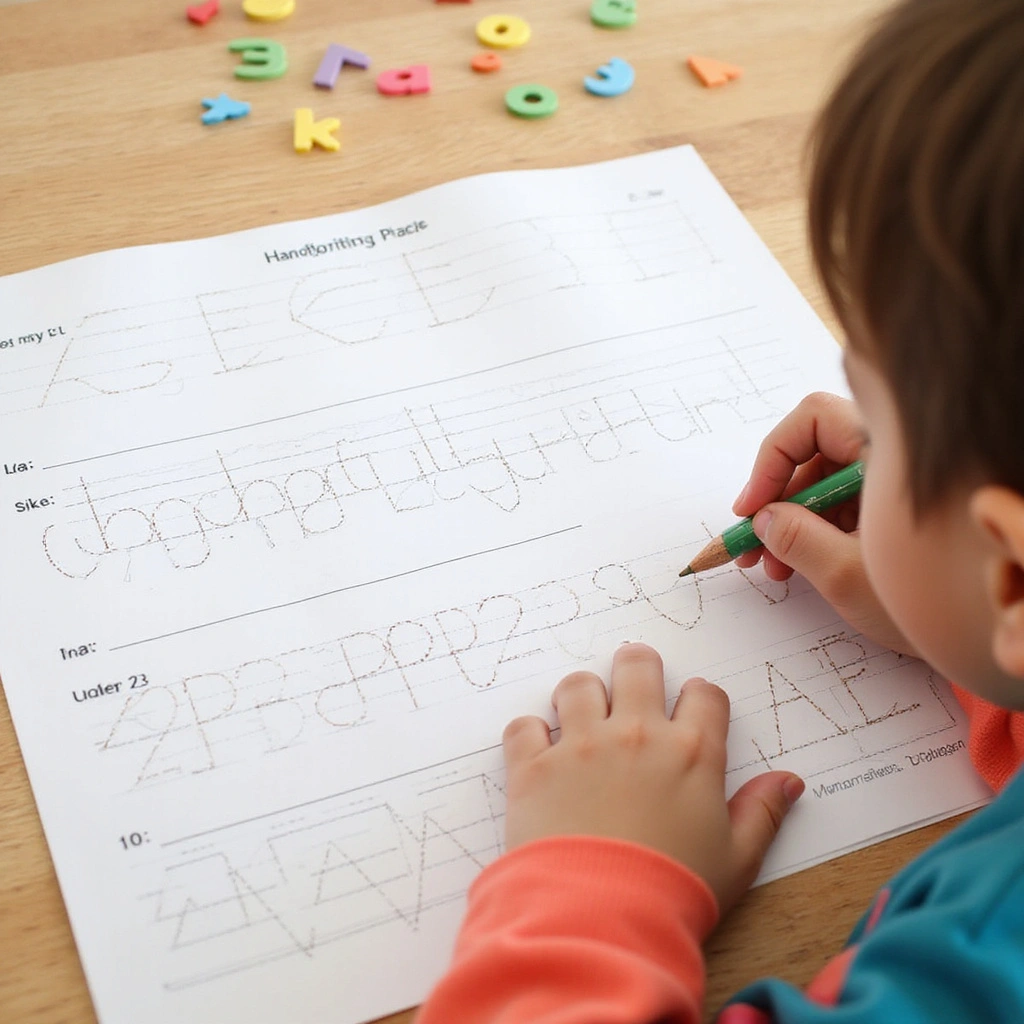



Pre K writing sheets are designed for children ages 3 to 5 who are beginning to develop fine motor and early writing skills.
They focus on line tracing, shapes, patterns, pencil control, and hand strength, all of which are essential for future handwriting.
Short sessions of 5 to 10 minutes are ideal for preschoolers to keep them engaged without losing focus.
Yes, these worksheets are perfect for beginners and start with very basic movements before progressing to more advanced skills.
Yes, they are designed for both home and classroom use and can easily fit into preschool lesson plans or activity centers
Early writing success begins with the right tools. Squiggle Squad Pre K writing sheets give children the skills, confidence, and support they need to succeed in their writing journey.
Help your child take the first step toward strong handwriting with worksheets designed for real progress.
By: Holly Britton
National Handwriting Day is celebrated January 23rd in honor of John Hancock, whose large, elaborate signature at the bottom center of the U.S. Constitution testifies to the importance placed on penmanship many years ago. The beautiful swooping letters presented a perfect finish to the world-changing document. His birthday, then, seems an appropriate day to highlight the intricate, very human act of writing by hand.
I’ve read some wonderful books on the history of handwriting. Books such as Script and Scribble by Kitty Burns Florey and Imprint and Trace by Sonja Neef. They provide a fascinating walk through the development of various tools and styles of writing. From cave paintings to hammer and chisel, from the printing press to the typewriter, from quill and ink to the ballpoint pen—time and distance between humans is bridged by the written word. (As an interesting side note: whether one uses a pencil or a computer, all writing is done by the human hand… More on that in another blog.)
I talk to people almost every day about handwriting. Discussions range from topics of penmanship to computer technology to classroom instruction. Frequently I hear statements like, “She couldn’t even read the professor’s handwriting because it was in cursive!” Or, “They don’t teach handwriting because kids just text and keyboard.” What I want to note here, is that in most conversations it is clear that the word “handwriting” has become synonymous with “cursive” or “script,” which may be why some people believe it is something of the past. Literally speaking, however, handwriting is quite simply the act of writing by hand. Sure, letters can be connected; they can be fanciful and formal. But handwriting can also be simple, basic, quirky, or even awkward. It should, of course, be legible but style and presentation is up to the writer. Handwriting is useful and, in many ways, necessary to human flourishing. (I’ll save my lengthy thoughts about this for another time.)
Handwriting is not lost or dead. As long as humans are alive, handwriting lives. From my time spent teaching kids, in my personal and professional life, and from basic life experience and all my studies, I see handwriting as being as essential as speaking. Handwriting helps hone our thoughts. It allows us to express ourselves in word and art. It transcends time. It preserves ideas. It stokes memories. It inspires others. It is uniquely human. It is uniquely you.
My earlier blogs have covered (and future posts will contain) why instruction in writing by hand is essential to early childhood learning, but for today—this National Day of Handwriting—let us celebrate humanity’s complex, beautiful, and unique ability to write by hand.
How You Can Observe National Handwriting Day:
1. Write a handwritten note to someone, anyone— a family member, your waiter, a flight attendant, a neighbor.
2. Practice forming letters. Just write the alphabet or your full name. Try writing in print and then in cursive. Look up some tutorials on YouTube to inspire and challenge you.
3. Buy a new writing implement. Writing is so much more fun with a new gel pen or mechanical pencil. Or get ambitious and buy a calligraphy set.
4. Tell someone about Squiggle Squad. I designed it because I believe everyone should be taught to write for ease and efficiency, and I knew teachers needed support materials to make that happen!
~Holly On Handwriting